
About the Process
From Clay to Finished Pottery
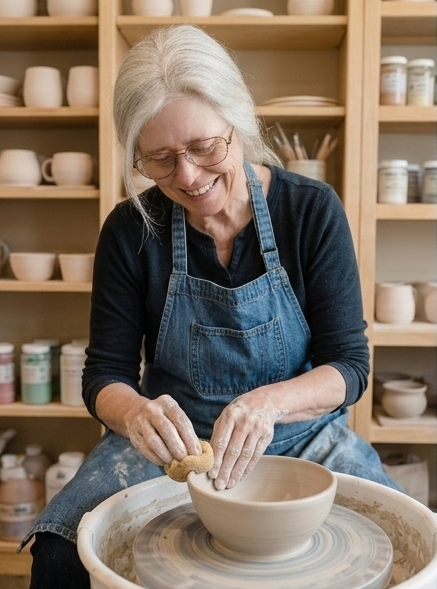
Every piece of pottery begins with clay. Before it can be formed, the clay is wedged by hand to even out the moisture and remove air pockets. This prepares the clay so it can be shaped more successfully.
The piece is then formed, either on the pottery wheel or by hand-building methods such as slabs, coils, or pinching. Once the basic form is complete, it is allowed to firm up to a leather-hard stage. At this point, the piece may be trimmed, refined, carved, altered, or have handles, feet, or other details added.
After shaping is complete, the pottery must dry slowly and evenly. This drying stage is important because clay that dries too quickly or unevenly can crack or warp. Once the piece is completely dry, it is called bone dry and is ready for the first kiln firing.
The first firing is called a bisque firing. During this firing, the clay hardens and becomes more durable, but it is still porous enough to absorb glaze. After the bisque firing, each piece is cleaned, waxed where needed, and glazed by dipping, pouring, brushing, or layering glazes.
The glazed pottery is then loaded into the kiln for the final glaze firing. During this firing, the glaze melts and bonds to the clay surface. The clay also matures and becomes strong and functional, depending on the clay body and firing temperature.
After the kiln reaches temperature, it must cool slowly before it can be opened. Unloading the glaze firing is always an exciting moment because the final colors, textures, and glaze movement are revealed only after the firing is complete.
From wedging to unloading, each piece passes through many stages by hand. Slight variations in size, shape, color, and surface are part of the handmade process and are what make each piece unique.
Raku
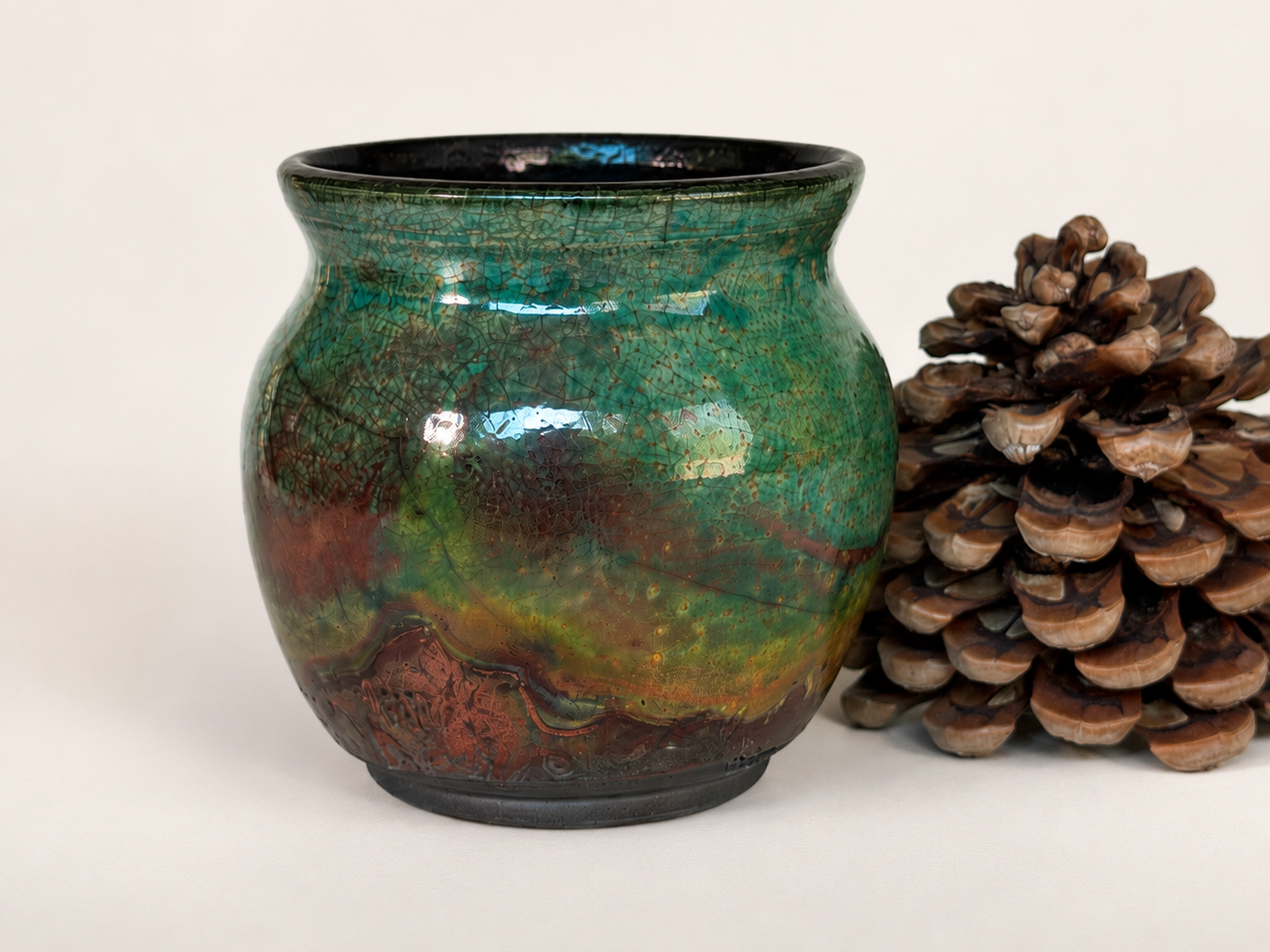
Raku is a dramatic and unpredictable firing process that creates one-of-a-kind surfaces. Each piece is first formed from clay, dried, and bisque fired. After that, it may be glazed, burnished, or finished with terra sigillata before being placed into a hot raku kiln.
Unlike a traditional glaze firing, raku pieces are removed from the kiln while they are still glowing hot. They are then placed into a container with combustible materials such as paper, sawdust, or other organic material. The heat causes the materials to ignite, and the limited oxygen inside the container affects the surface of the piece. This process can create crackle patterns, smoky markings, metallic flashes, and rich surface variation.
Because raku pottery is exposed to thermal shock and post-firing reduction, the results are always somewhat unpredictable. No two pieces will ever be exactly alike. Raku pieces are decorative and are not intended for food, dishwasher, microwave, or outdoor use where they may be exposed direct sunlight or to freezing temperatures.
Horsehair Raku
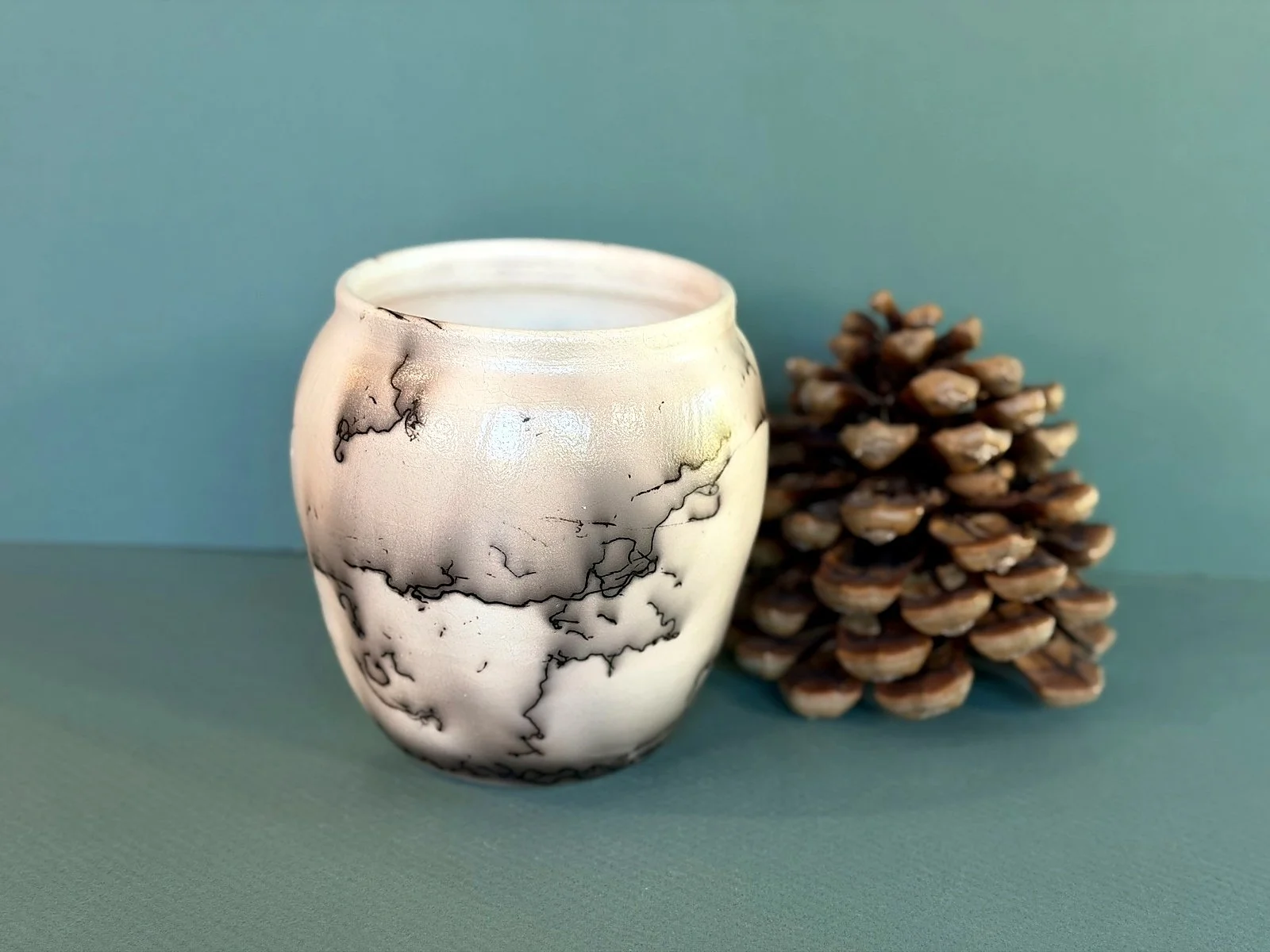
Horsehair raku is a specialized form of raku firing that uses the heat of the pottery itself to create markings on the surface. The piece is removed from the kiln while it is still extremely hot, and strands of horsehair are carefully applied to the surface. As the hair touches the hot clay, it burns instantly and leaves behind fine, organic carbon lines.
Other materials, such as feathers or sugar, may also be used to create additional markings and soft smoky effects. The finished surface often has a quiet, natural quality, with delicate lines that seem to move across the form.
Horsehair raku is especially dependent on timing, temperature, and chance. The curve of each line, the depth of the carbon mark, and the placement of each pattern are created in the moment. These pieces are decorative only, should be handled with care and should not be exposed to direct sunlight.
Kintsugi
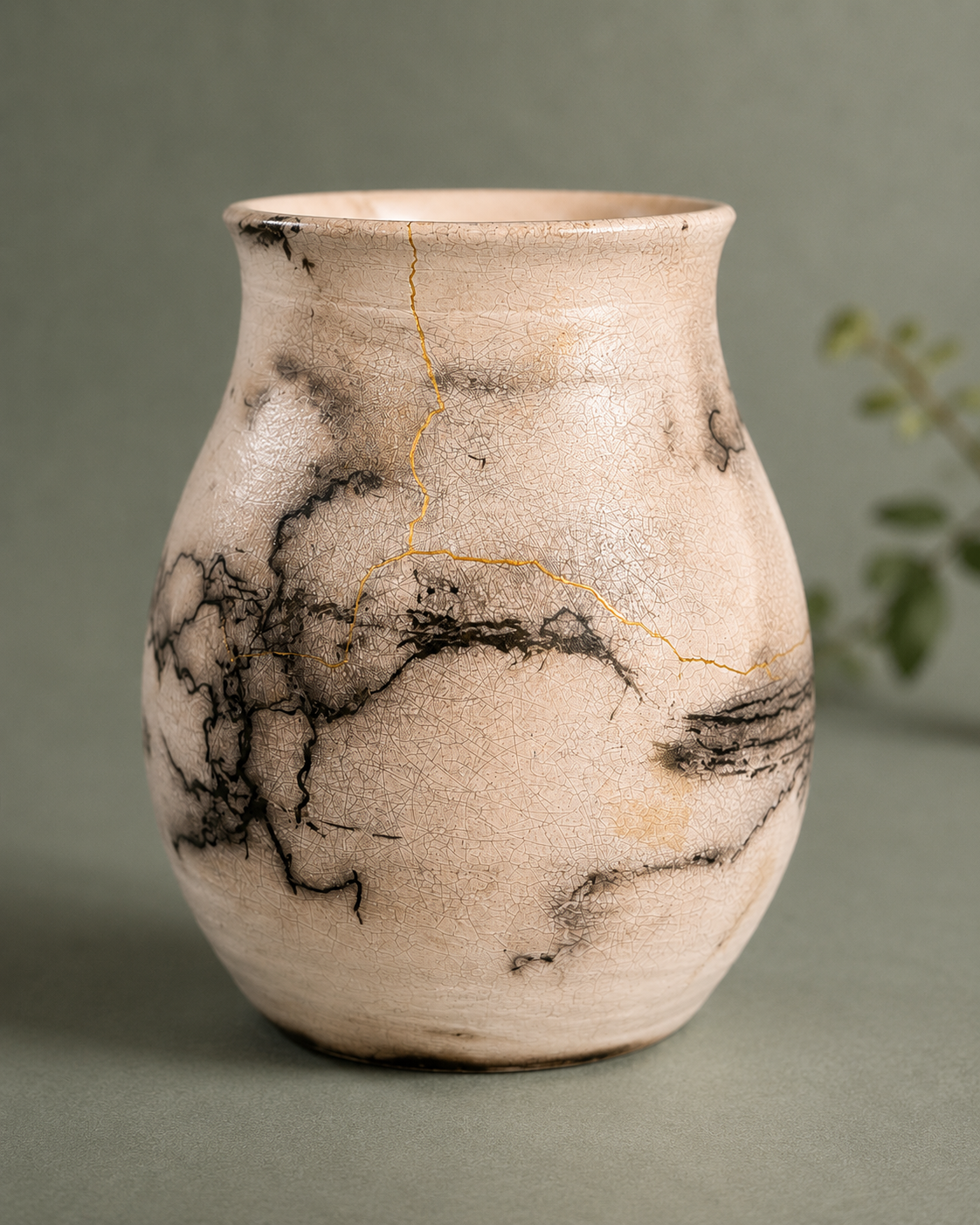
Kintsugi is the traditional Japanese practice of repairing broken pottery in a way that honors, rather than hides, the break. Instead of disguising cracks or repairs, kintsugi draws attention to them, often using gold to highlight the repaired lines.
In this work, kintsugi-style repair is created using lacquer and gold mica. The gold lines become part of the story of the piece, adding contrast, texture, and meaning. Rather than seeing a crack as a flaw, kintsugi treats it as part of the object’s history.
Kintsugi reminds us that beauty can come from imperfection, repair, and change. These pieces are decorative and should not be used for food or placed in the dishwasher or microwave.